Physical Address
304 North Cardinal St.
Dorchester Center, MA 02124
Physical Address
304 North Cardinal St.
Dorchester Center, MA 02124

Allieu S. Tunkara
At a thick forest close to Rothumba Village not far from Waterloo in the Western Rural district, stands a historic building known historically as the Ruins of Rothumba Island.
The monument is a treasure of history and tourism in today’s Sierra Leone.
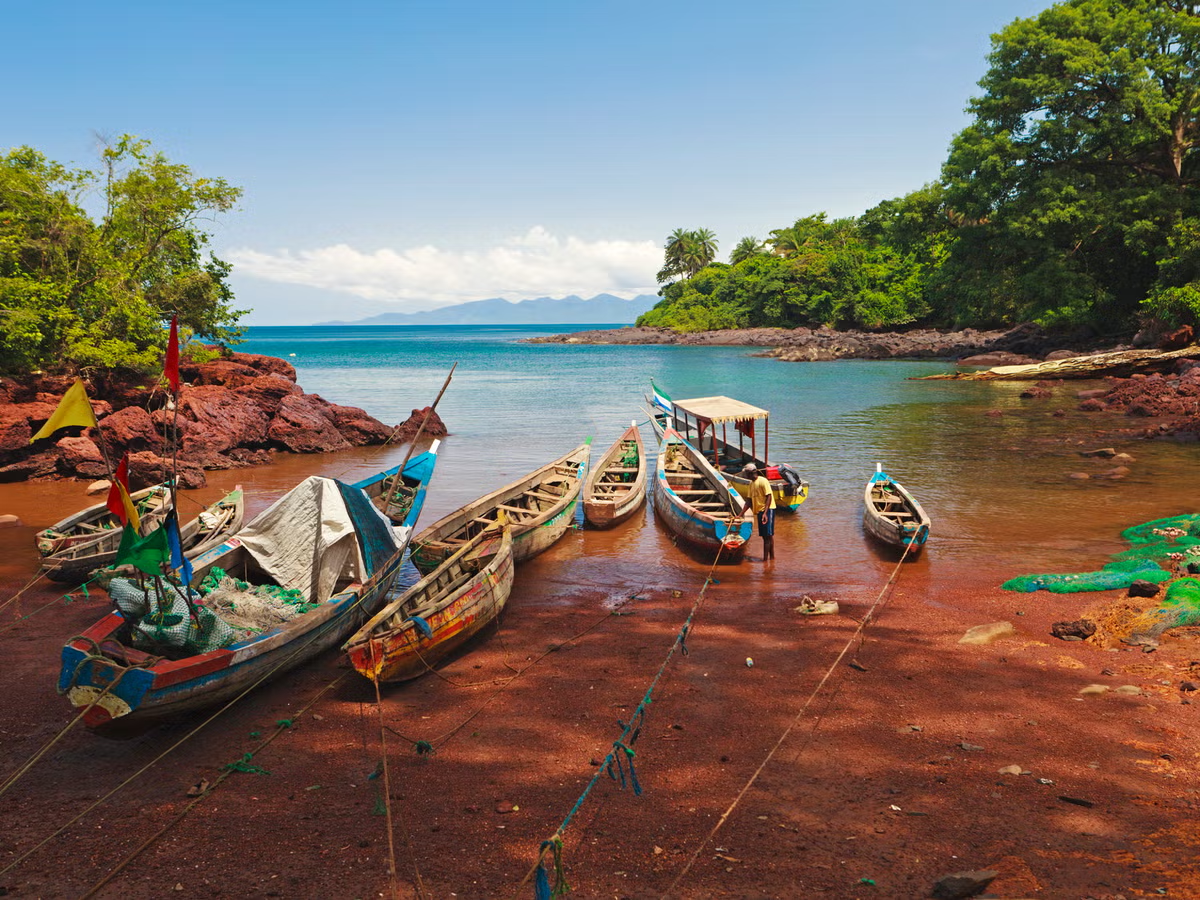
Rothumba Village can be accessed by boat across the Sierra Leone River, and on the mainland through Waterloo at Braima Junction.
The ancient building is built with clay bricks which has made it survive through the rough weather conditions of the ages despite its old, dilapidated and crumbling looks.
Although it seems somewhat crumbling to ground level, it bears the looks of a two-storey building which history taught that it used to house slaves and slave masters.
The building represents one of Sierra Leone’s monuments, and artifacts of history and archaeology that still showcases Sierra Leone’s tourism potentials kept alive by the Ministry of Tourism and Cultural Affairs.
The Ruins of Rothumba was a slave forte fortified with clay bricks and stones where slaves would be kept for months in preparation for the long voyage to the Americas known as the ‘New World’ where the labour requirement was in high demand. It was in that building slaves bought from chiefs in the provinces were gathered before sold to different slave dealers that poured into Sierra Leone through the ocean.
The building came into existence in the late 16th century and the whole of Rothumba village was occupied by slave masters prominently the Brits who would sell Sierra Leone’s gallant men and women to the slave buyers to toil in the New World.
A somewhat ancient and abandoned church built over a century ago bears the testimony of British occupation of the village for years.
The trade in human beings known in history as the Trans-Atlantic Slave Trade flourished for centuries before it came to an end permanently in 1807 when Sierra Leone on was on the throes of colonialism.
Some slave fortes known as Plantain, Banana and Bunce islands were operated throughout the slave trade until the final abolition of slavery in Sierra Leone.
However, it was quite a different story for Rothumba village which connected Waterloo and other different parts of the country through the mainland, a factor that facilitated the frequent escapes of slaves.
The situation forced the slave masters to move to Bunce Island and other islands which made it impossible for slaves to run away by swimming through the wide river.
The village, Rothumba is situated on the banks of the Sierra Leone River not far from just one-hour thirty-minute ride on the sea from Kissy Terminal here in Freetown.
Rothumba Is not too far from the historic Bunce island, another huge tourism potential for Sierra Leone as stands on the threshold of being decalred a World Heritage Site.
The ruins of Rothumba still represents one of Sierra Leone’s monuments and artifacts of history and archaeology that still showcases the country’s tourism potentials kept alive by the Ministry of Tourism and Cultural Affairs.
For the locals, the building seems to offer no valuable service since they could not appreciate its historic and touristic value as its rich history is not told by the old.
Such lack of historic knowledge about the ancient building is forcing them to rip it off, a move that most of the village elders including the town chief find hard to up with.
One of the angered stakeholders in the community is the Harbour Master, Ibrahim Williams who accuses some village boys of depleting the building through pilfering of the bricks.
“It is very easy for some of the youth in the town to steal the clay bricks at night which they sell to make money. Some effort has been made by the town chief and stakeholders to stop the stealing, but it still continues,” Williams said as he pointed at a broken wall of the building where bricks had been pilfered and sometimes sold to community people.